Manta rays, reef sharks, 1,000+ fish species, and pristine coral — Komodo is consistently rated among the world’s top 5 dive destinations.
Free expert consultation — our Labuan Bajo team replies within 15 minutes.

Komodo National Park sits at the convergence of the Indian Ocean and the Pacific Ocean, where powerful currents funnel nutrient-rich waters through narrow channels between volcanic islands. This unique oceanographic position creates one of the most biodiverse marine ecosystems on Earth — an underwater wonderland that consistently earns its place among the world’s top five dive destinations alongside the Galapagos, Great Barrier Reef, Maldives, and Red Sea.
The park’s marine biodiversity is staggering: over 1,000 species of reef fish, 260 species of reef-building coral, 70 species of sponge, and an impressive roster of megafauna including oceanic manta rays, reef manta rays, white-tip reef sharks, grey reef sharks, green sea turtles, hawksbill turtles, dolphins, dugongs, and even the occasional whale shark. Whether you are a certified diver with hundreds of logged dives or a first-time snorkeler, Komodo’s waters offer encounters that rival anywhere on the planet.
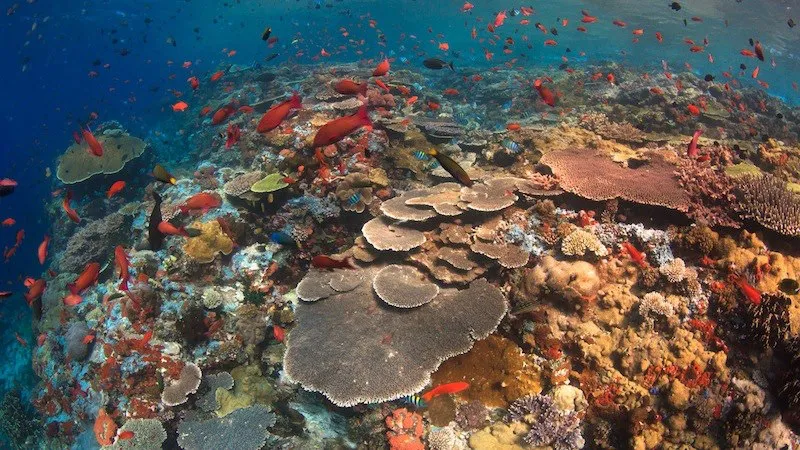
Manta Point: Manta Point is Komodo’s most famous dive and snorkel site, renowned for reliable encounters with oceanic manta rays. These gentle giants, with wingspans reaching 5 meters, visit cleaning stations on the reef where small fish remove parasites from their skin. Encounters are possible year-round, with peak season from December through February when plankton blooms attract the largest gatherings. Both divers and snorkelers can experience mantas here, as the cleaning stations sit at just 5-12 meters depth.
Batu Bolong: A small rock pinnacle rising from deep water, Batu Bolong is widely considered the single best dive site in Komodo. The tiny island belies its underwater significance — every square meter of this seamount is covered in vibrant soft corals, sea fans, and sponges teeming with reef fish. Strong currents bring large pelagics including giant trevally, napoleon wrasse, barracuda schools, and white-tip reef sharks. Suitable for advanced divers due to currents. Depth range: 5-30+ meters.
Castle Rock: Another iconic seamount dive, Castle Rock offers dramatic encounters with schooling fish in powerful currents. Massive schools of surgeonfish, fusiliers, and sweetlips create walls of silver that part as grey reef sharks cruise through on patrol. The site is known for its healthy shark population and the adrenaline rush of drift diving along the reef edge. Advanced certification recommended. Depth: 8-30 meters.
Crystal Rock: Adjacent to Castle Rock but offering a different character, Crystal Rock features a coral-encrusted pinnacle reaching to within 4 meters of the surface. The shallower profile makes it accessible to a wider range of certification levels, while still delivering impressive marine life including turtles, octopus, pygmy seahorses, and dense schools of anthias. Exceptional for both wide-angle and macro photography.

You do not need a diving certification to experience Komodo’s incredible marine life. Several sites offer world-class snorkeling in shallow, calm waters accessible to swimmers of all abilities. Pink Beach features healthy coral starting at just 1 meter depth, with clownfish, parrotfish, and sea turtles easily visible from the surface. Kanawa Island provides a coral garden stretching from the beach, perfect for beginners. Siaba Island offers shallow reef flats with excellent visibility and gentle currents, ideal for extended snorkeling sessions.
For more adventurous snorkelers, Manta Point and Taka Makassar offer encounters with larger marine life in slightly deeper waters. Life jackets and guide assistance are always available, and our crew ensures your safety while maximizing your underwater experience.
One of the planet’s last truly wild frontiers — explored the right way.
Bali → Komodo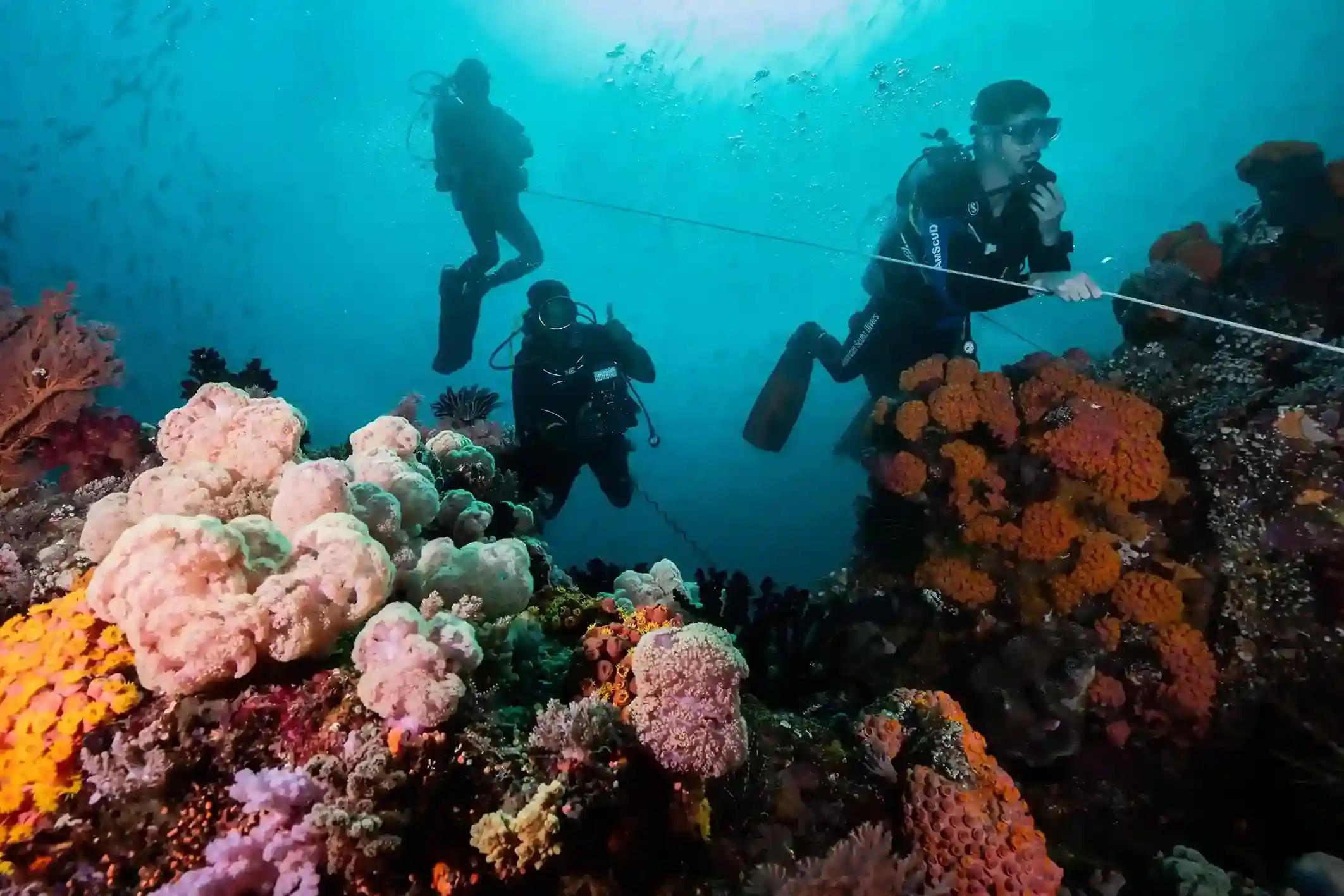
Komodo’s tropical location ensures year-round diving, though conditions vary by season. The dry season (April-October) offers the best visibility (20-30+ meters), calmer seas, and warmer water temperatures (27-30°C). This is prime season for the northern dive sites including Batu Bolong, Castle Rock, and Crystal Rock. The wet season (November-March) brings richer plankton blooms that attract manta rays in greater numbers, plus slightly cooler water (24-27°C) that brings different species to the southern sites.
Water currents in Komodo are a defining feature of the diving experience and can be strong at certain sites and tidal states. Our experienced dive guides know the optimal timing for each site, ensuring you dive when conditions are safest and marine life is most active.

We offer several ways to dive Komodo, from single-dive add-ons to dedicated multi-day diving expeditions. For the most comprehensive diving experience, our liveaboard cruises with dive packages include 3-4 dives per day, Nitrox availability, and access to the most remote sites. Day-trip diving from Labuan Bajo covers the nearest sites with 2-3 dives per session. All diving is guided by PADI-certified instructors with intimate knowledge of local conditions.
Snorkeling is included on all our tour packages from $85 per person.
No certification needed, PADI instructor
Full equipment, guide, 2-3 dives/day
Included on all tours, premium gear
Whether you snorkel or dive, Komodo’s marine life will take your breath away.