Komodo delivers dragons, guaranteed manta rays, and easy access one hour from Bali; Raja Ampat offers the planet’s highest marine biodiversity at a higher cost in time and budget. An honest side-by-side comparison to help you choose — or plan both.
Free expert consultation — our Labuan Bajo team replies within 15 minutes.
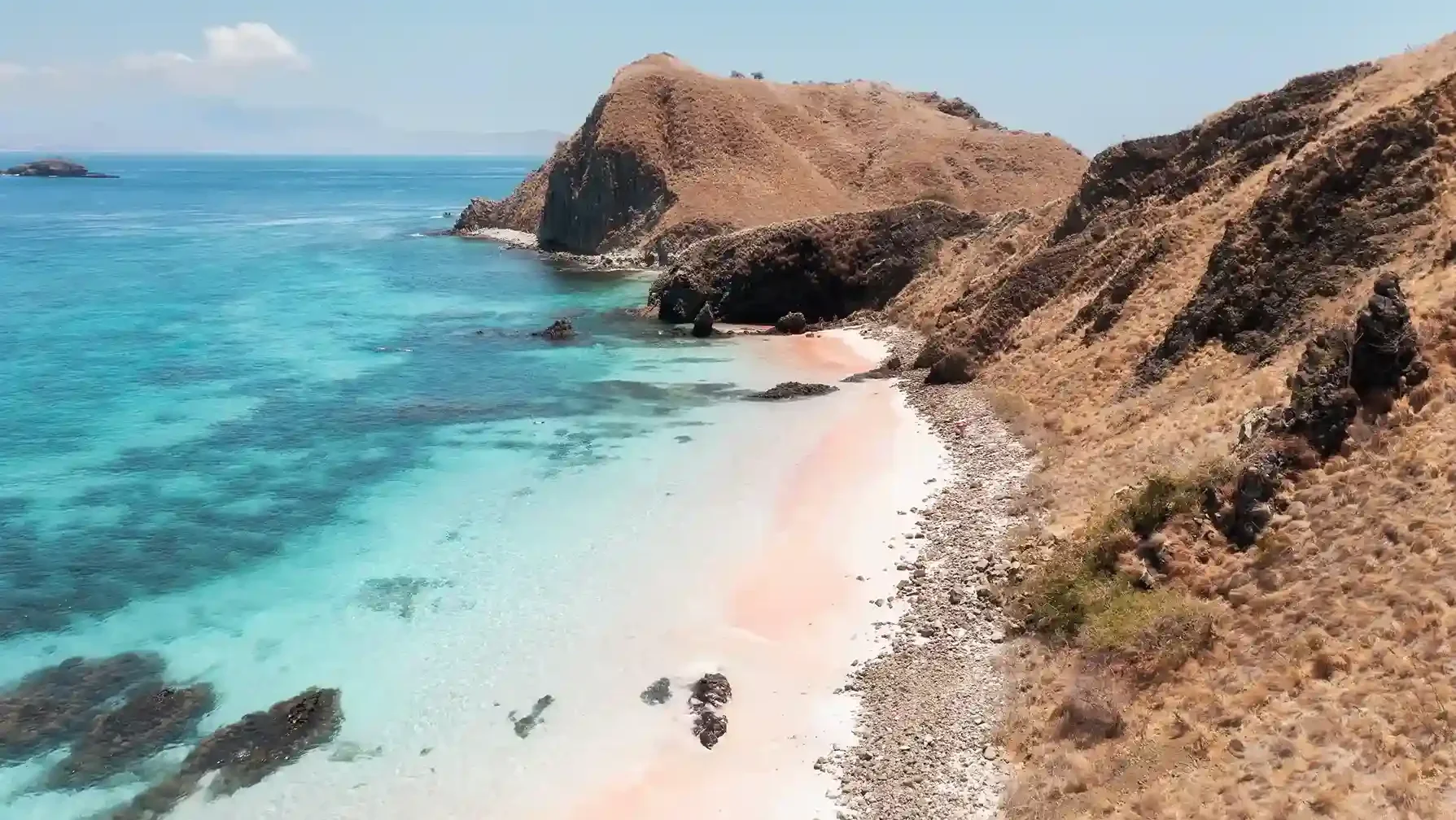
Komodo National Park offers Komodo dragon encounters, top-tier manta ray diving, and easier access from Bali (a 1-hour flight). Raja Ampat in West Papua has the planet’s highest marine biodiversity with 1,500+ fish species and pristine coral reefs, but requires longer travel (2+ flights). Komodo suits adventure travelers; Raja Ampat suits dedicated divers.
Indonesia possesses two of the world’s most extraordinary marine destinations, and choosing between them is a dilemma many travelers face. Komodo National Park in East Nusa Tenggara and Raja Ampat in West Papua both offer once-in-a-lifetime experiences — but they cater to different traveler profiles, budgets, and interests.
This guide provides an honest, side-by-side comparison based on real travel logistics, costs, marine life encounters, and overall experience quality. Whether you’re a certified diver, snorkeler, nature photographer, or adventure traveler, understanding the differences helps you choose the right destination for your next Indonesian journey.
| Factor | Komodo National Park | Raja Ampat |
|---|---|---|
| Getting there | 1-hour direct flight from Bali | 2+ flights via Jakarta or Makassar, 8-14 hours total |
| Fish species | 1,000+ | 1,500+ |
| Coral species | 260 | 600+ |
| Signature encounters | Komodo dragons and manta rays | The highest marine biodiversity on Earth |
| Daily budget | $80-500 | $150-800 |
| Park fees | $40-50 per visit | ~$100, valid one year |
| Diving level | Intermediate to advanced (strong currents) | All certification levels (calmer conditions) |
| Water temperature | 20-28°C | 27-30°C |
| Peak season | April-October | October-April |
| Best for | Adventure travelers and snorkelers | Dedicated divers |
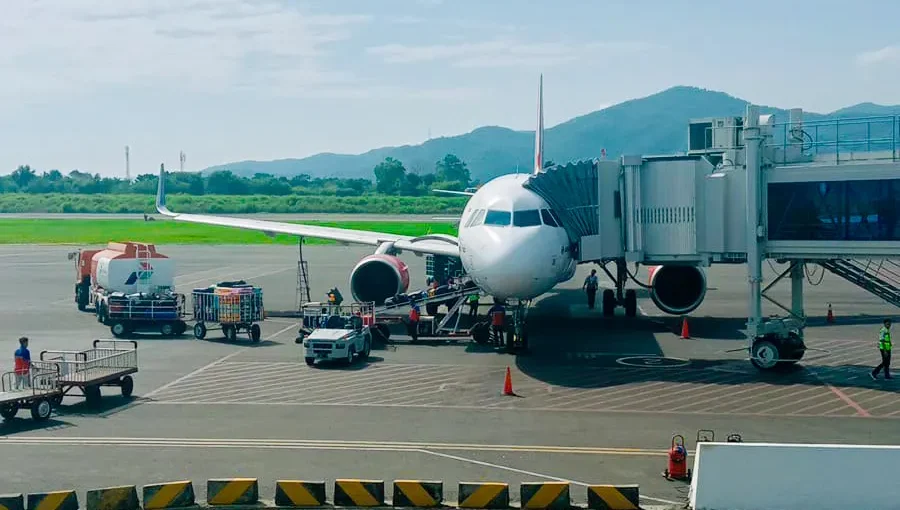
Komodo wins decisively on accessibility. Labuan Bajo airport (LBJ) receives direct flights from Bali (1 hour), Jakarta (2.5 hours), and Surabaya. From Bali, you can wake up in Seminyak and be snorkeling in Komodo by lunchtime. The infrastructure around Labuan Bajo has developed rapidly, with international-standard hotels, restaurants, and tour operators serving visitors year-round.
Raja Ampat requires significantly more effort. Most travelers fly to Sorong (West Papua) — typically via Jakarta or Makassar, requiring at least one connection. From Sorong, a 2-hour ferry reaches Waisai (Raja Ampat’s main town), followed by another boat to your resort or liveaboard. Total travel time from Bali: 8-14 hours depending on connections. This remoteness is both Raja Ampat’s challenge and its charm — fewer visitors means pristine, uncrowded experiences.
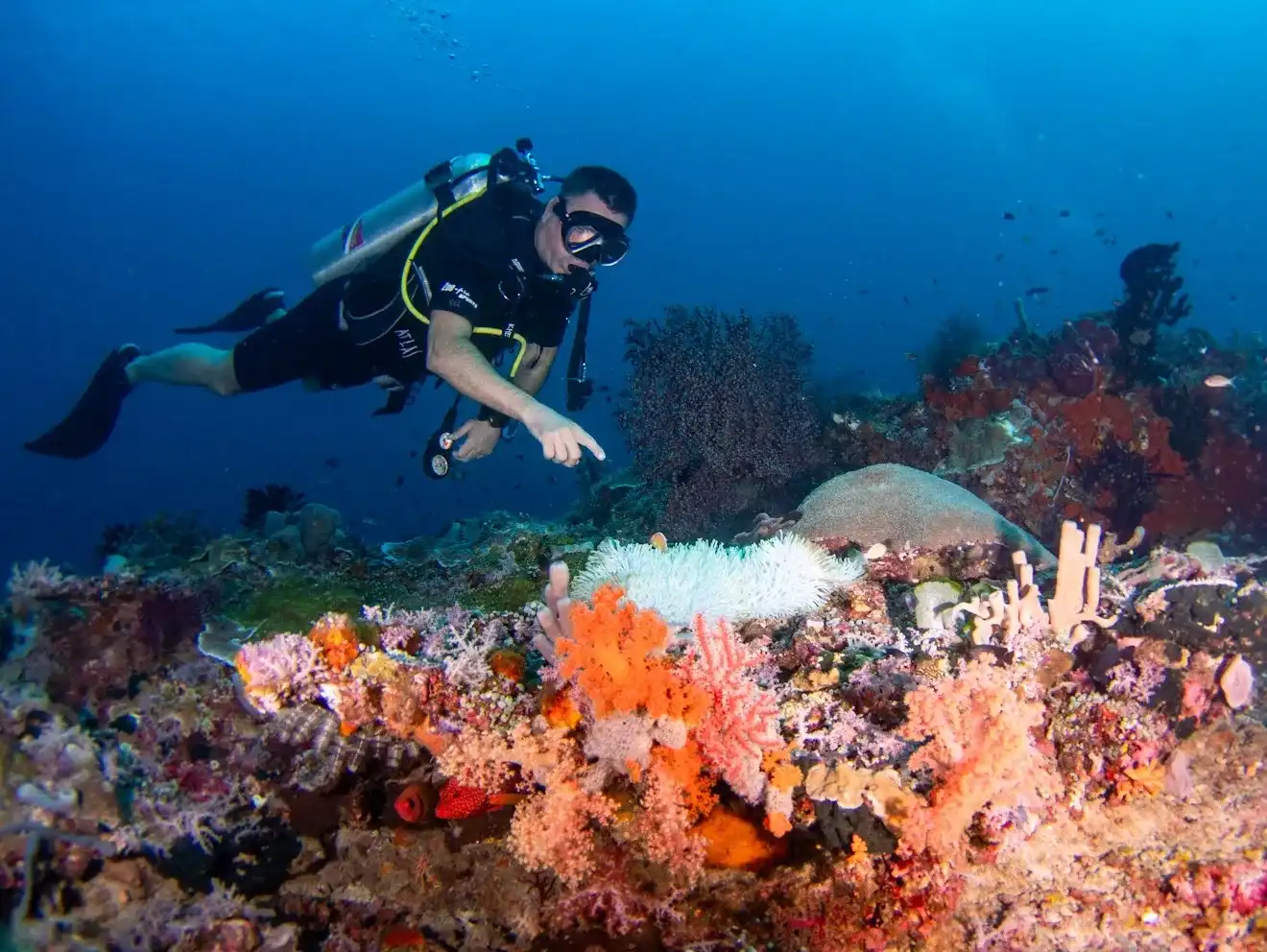
Raja Ampat sits within the Coral Triangle’s absolute epicenter of marine biodiversity. Scientific surveys have documented over 1,500 fish species, 600+ coral species, and countless invertebrates in its waters. This is the single most biodiverse marine ecosystem on Earth — no exaggeration. A single dive in Raja Ampat can reveal more species than entire reef systems in the Caribbean.
Komodo’s marine life is exceptional but different. The nutrient-rich currents flowing between the Indian and Pacific oceans create conditions favoring large pelagic species: manta rays (virtually guaranteed at Manta Point), reef sharks, eagle rays, dolphins, and during season, even whale sharks. Komodo has approximately 1,000 fish species and 260 coral species — impressive by global standards, though fewer than Raja Ampat.
For dedicated divers seeking maximum biodiversity and pristine coral coverage, Raja Ampat is unmatched. For those wanting reliable large animal encounters — particularly manta rays — combined with dramatic current diving, Komodo delivers consistently.
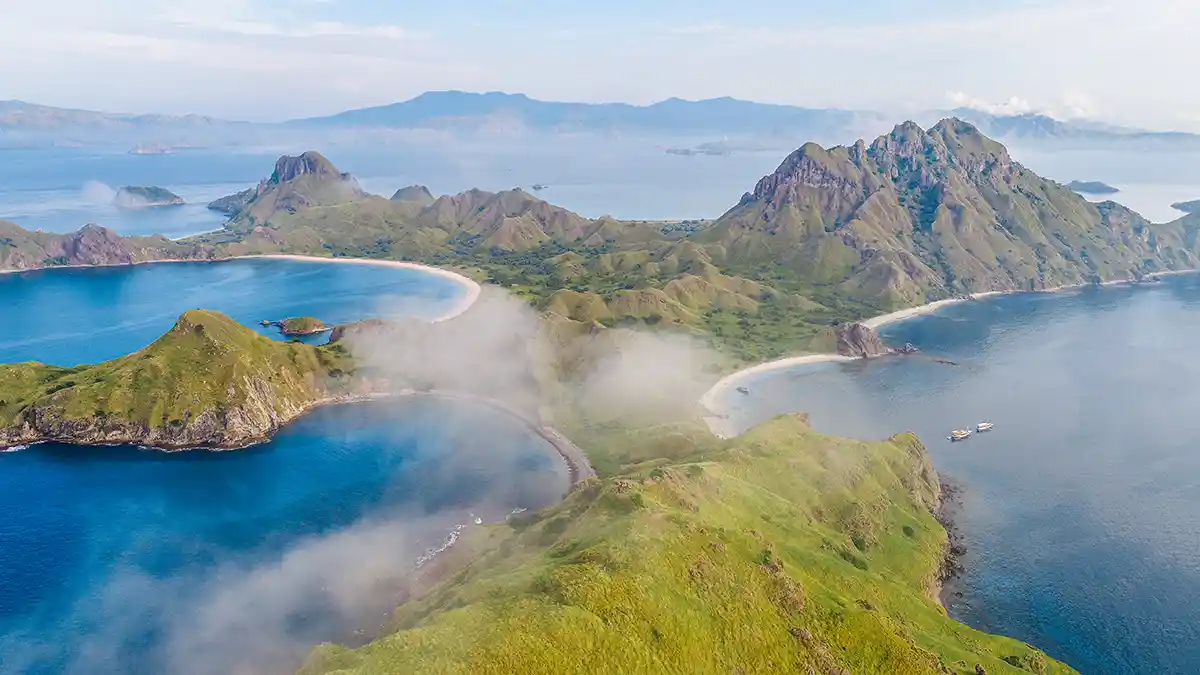
This is where Komodo pulls ahead dramatically. The Komodo dragon — the world’s largest living lizard — exists nowhere else on Earth. Guided treks on Komodo Island and Rinca Island provide unforgettable wildlife encounters that no other destination can replicate. Add the iconic Padar Island sunrise hike (one of Indonesia’s most photographed viewpoints), the surreal Pink Beach, and the volcanic landscapes of Flores Island with attractions like Kelimutu and Wae Rebo, and Komodo offers a complete above-and-below-water experience.
Raja Ampat’s land attractions are more limited but quietly spectacular. Hidden lagoons, mushroom-shaped limestone islands (karst formations), bird-of-paradise viewing at dawn, and traditional Papuan villages offer authentic cultural experiences. However, most visitors focus almost entirely on the underwater world — and for good reason.
One of the planet’s last truly wild frontiers — explored the right way.
Bali → Komodo
Komodo is significantly more affordable at every level. Budget day trips start at $80/person, mid-range liveaboards at $330/person for 2 nights, and luxury experiences at $800-2,500/person. Labuan Bajo hotels range from $30/night (guesthouse) to $500+/night (luxury resort). Flights from Bali cost $50-150 one-way. A complete 3-day Komodo experience can be done for $300-500 total including flights and accommodation — or $2,000-5,000 at the luxury level. See our detailed cost breakdown for current pricing.
Raja Ampat costs more across the board. Flights from Bali typically run $200-400 return (via Jakarta). Accommodation starts at $80/night for basic homestays and $300-1,500/night for dive resorts. Liveaboards range from $300-500/day. The marine park entry permit (TAG) costs approximately 1,000,000 IDR (~$65 USD) for international visitors. A 5-day Raja Ampat trip typically costs $1,500-3,000 mid-range, or $5,000-15,000+ for luxury dive resorts and premium liveaboards.
Komodo is famous for strong currents — this is what brings the big animals and nutrients but makes diving more challenging. Sites like Batu Bolong, Castle Rock, and The Cauldron require intermediate to advanced certification. Visibility ranges from 10-30 meters depending on season and location. Water temperatures vary from 20°C (south) to 28°C (north), sometimes within a single dive — a unique thermal experience caused by deep ocean upwelling.
Raja Ampat generally offers calmer conditions with easier diving suitable for all certification levels. Visibility averages 15-30 meters, with some sites exceeding 40 meters. Water temperatures remain a comfortable 27-30°C year-round. The diving focus is macro-photography, coral gardens, and reef diversity rather than current-driven pelagic encounters.
Komodo’s peak season runs April-October with the best diving conditions April-June and September-October. The dry season offers calmer seas and better visibility, though manta rays are present year-round. The wet season (November-March) brings rougher seas but fewer crowds and lower prices.
Raja Ampat’s prime season is October-April — conveniently opposite to Komodo’s peak. This makes it theoretically possible to visit Komodo in dry season and Raja Ampat in wet season (Raja Ampat’s dry season) within the same year. October-November and March-April are excellent for both destinations.

If this is your first Indonesian marine adventure and you have limited time, choose Komodo. The combination of accessible flights from Bali, Komodo dragon encounters, dramatic landscapes, top-tier snorkeling, and reasonable costs makes it the more complete and practical destination. Most travelers can add Komodo to an existing Bali trip with just 2-3 extra days.
If you’re a certified diver with 7+ days specifically dedicated to marine exploration and a flexible budget, Raja Ampat is the bucket-list destination. Its biodiversity is genuinely exceptional, and the remote, uncrowded experience justifies the extra effort and cost. Many serious divers plan entire trips around Raja Ampat alone.
The ideal? Both. Indonesia rewards repeat visitors, and experiencing both Komodo and Raja Ampat — in different seasons — gives you the full spectrum of what this archipelago’s oceans offer.
Start with Indonesia’s most accessible marine paradise. We’ll craft your perfect Komodo itinerary.