One of the world’s most reliable sites for swimming alongside oceanic manta rays — wingspans up to 5 meters in crystal-clear Komodo waters.
Free expert consultation — our Labuan Bajo team replies within 15 minutes.
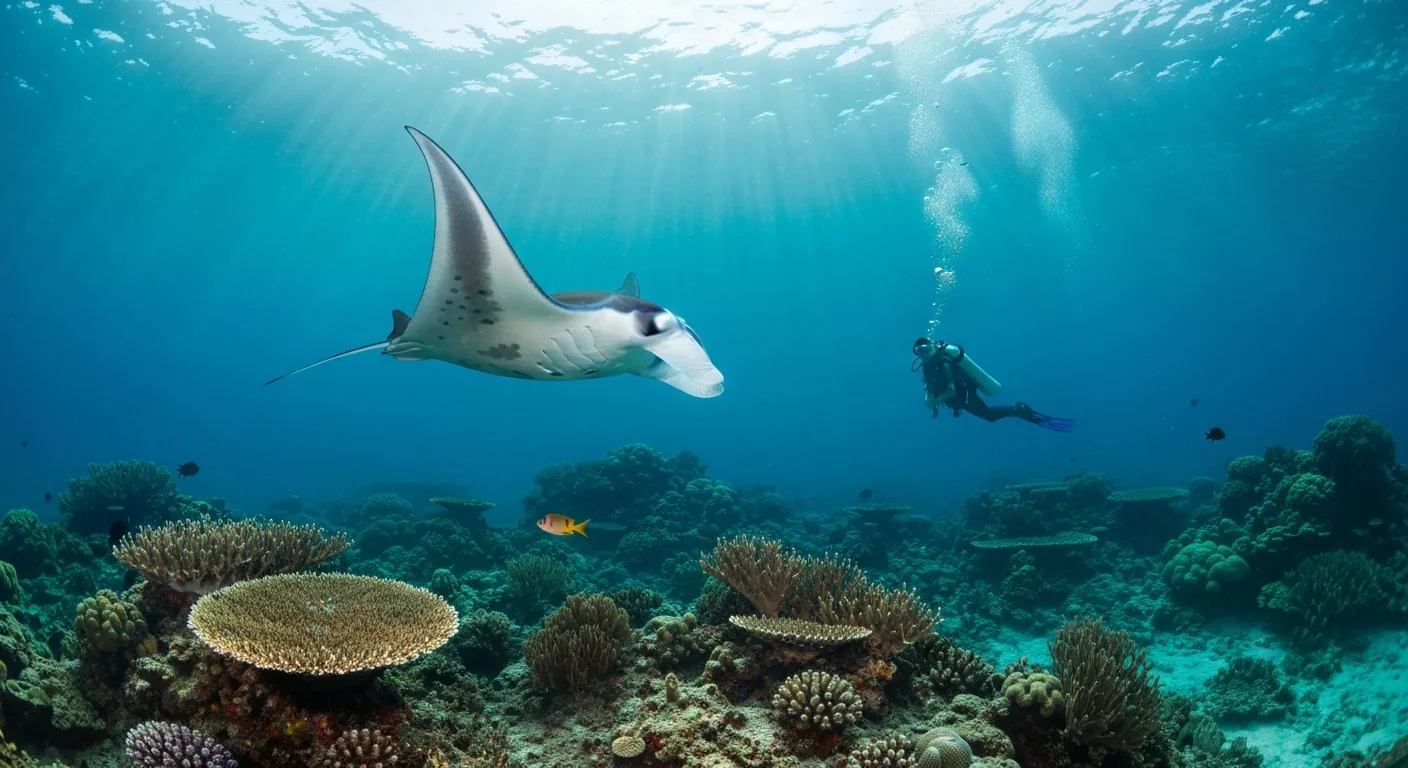
Manta Point, located on the southern side of Komodo Island at a site known as Makassar Reef, is one of the planet’s most extraordinary marine wildlife destinations. Here, oceanic manta rays — among the largest and most intelligent fish in the sea, with wingspans reaching up to 5 meters — gather at shallow cleaning stations where small wrasse fish remove parasites from their skin and gills. This natural grooming ritual brings the mantas into close proximity with snorkelers and divers, creating encounters that consistently rank among the most awe-inspiring wildlife experiences available anywhere on Earth. What makes Manta Point exceptional compared to other manta destinations worldwide is the combination of reliable sightings, shallow depth (cleaning stations sit at just 5-12 meters), crystal-clear visibility (15-30 meters during optimal conditions), and the sheer size and number of individuals that visit. It is not unusual to encounter 5-15 manta rays during a single session, with multiple individuals circling the cleaning stations in graceful, choreographed patterns that mesmerize even the most experienced marine observers.
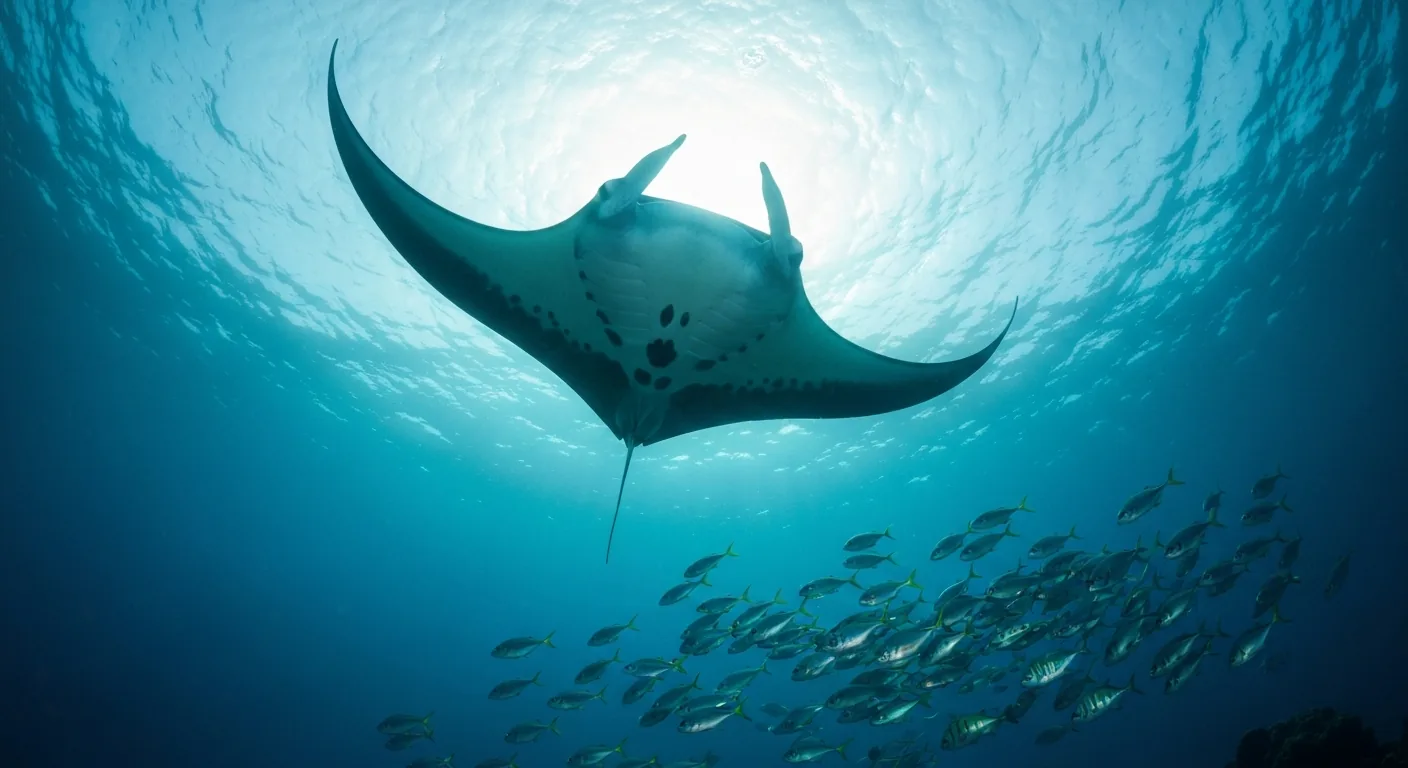
One of the most remarkable aspects of Manta Point is that you do not need to be a diver to experience these magnificent creatures. Because the cleaning stations sit in relatively shallow water, snorkelers floating at the surface can look down and see mantas gliding just a few meters below. On calm days with good visibility, the experience from the surface can be equally as impressive as the view from underwater. Our guides position snorkelers above the cleaning stations and brief them on proper manta etiquette — floating calmly, avoiding sudden movements, never touching or chasing the animals, and allowing the mantas to approach on their own terms. Manta rays are curious, intelligent creatures that often swim directly toward observers, creating heart-stopping moments of connection with one of the ocean’s most graceful inhabitants.
For certified divers, Manta Point offers an even more immersive experience. Descending to the reef where cleaning stations are located places you at eye level with mantas as they arrive, hover over the cleaning stations, and spiral in elegant circular patterns. The site is suitable for divers with Open Water certification or above, with typical diving depths of 8-15 meters and generally mild currents at the cleaning station locations. Advanced divers can explore the broader Makassar Reef system, which also supports green sea turtles, reef sharks, eagle rays, large schools of fusiliers, and diverse coral formations. The combination of megafauna encounters and healthy reef ecosystems makes this one of the most rewarding single dive sites in Komodo National Park.
One of the planet’s last truly wild frontiers — explored the right way.
Bali → Komodo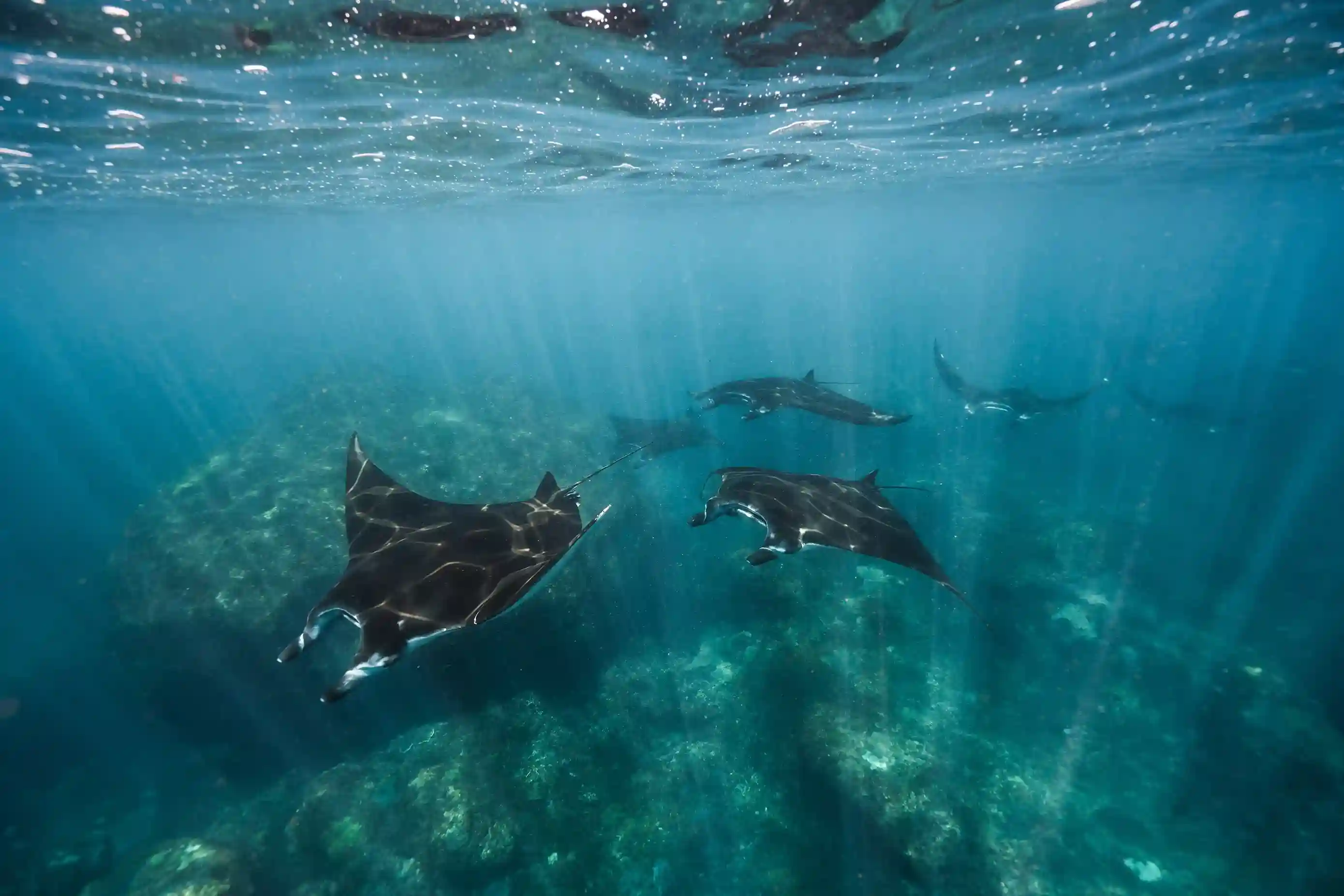
Manta ray sightings at Manta Point are possible year-round, making it a dependable destination regardless of when you visit Komodo. However, seasonal patterns do influence the frequency and number of mantas present. Peak season runs from December through February, coinciding with plankton blooms that attract the largest gatherings of feeding mantas — encounters with 10-20+ individuals are common during these months. The dry season (April-October) offers the best water visibility and calmest surface conditions, with slightly fewer but still reliable manta sightings. The transition months of March-April and October-November can offer an excellent combination of good sighting rates and pleasant diving conditions.
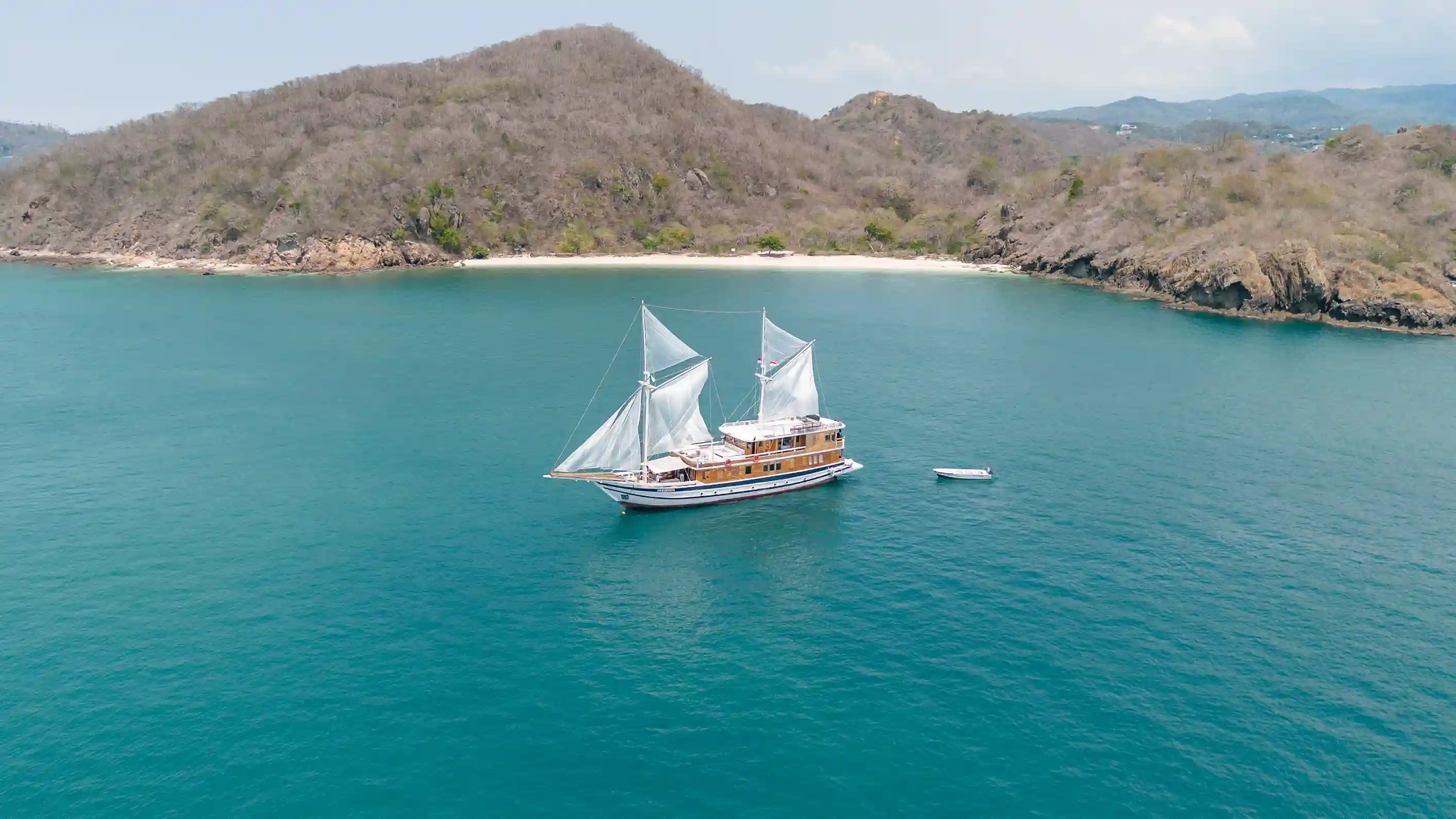
Manta Point is located approximately 2 hours by boat from Labuan Bajo, making it most accessible on multi-day liveaboard cruises and 3D2N packages that include the site as a standard itinerary stop. It can also be included in private speedboat charters as a dedicated manta trip, and some extended day trips reach the site though time at the location may be limited. For the best manta experience, we recommend allocating at least 1-2 hours at the site, allowing multiple snorkel or dive entries as mantas arrive and depart the cleaning stations throughout the session. Liveaboard itineraries typically position the vessel near Manta Point overnight, enabling early morning visits when waters are calmest and mantas are most active.
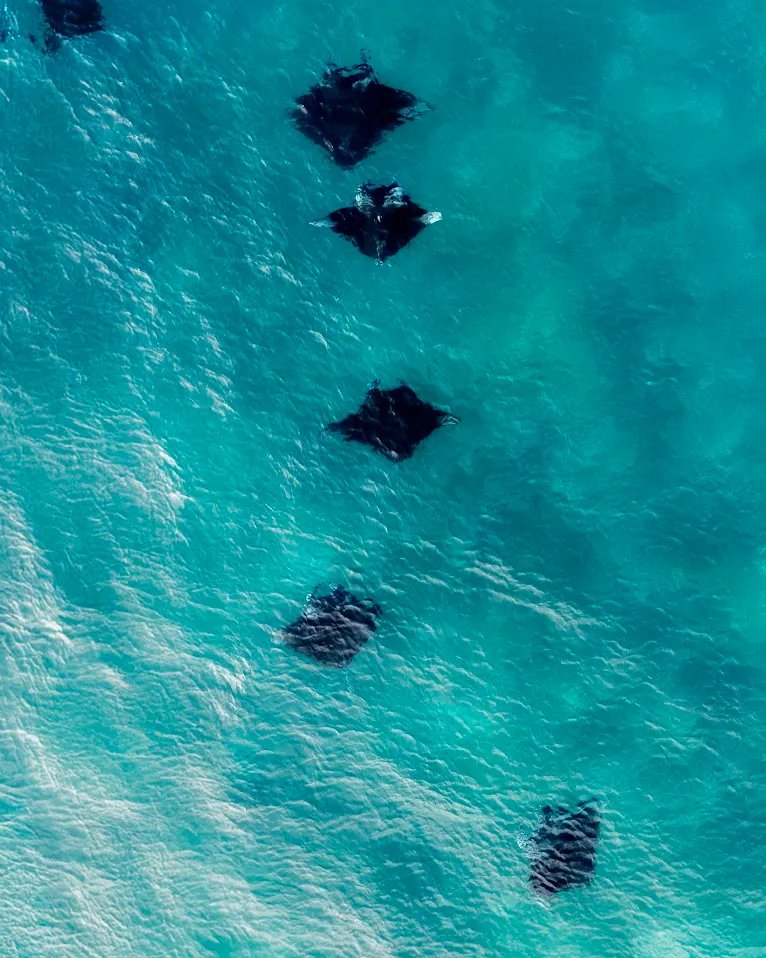
Manta rays are classified as Vulnerable on the IUCN Red List, and Komodo National Park serves as a critical habitat for their conservation. Indonesia declared full protection for all manta rays in 2014, making the country the world’s largest manta ray sanctuary. When visiting Manta Point, following responsible wildlife interaction guidelines directly contributes to the conservation of these magnificent animals. Responsible manta interaction rules include maintaining a minimum distance of 3 meters, never touching or attempting to ride mantas, avoiding flash photography, entering the water quietly without jumping or splashing, not using motorized underwater propulsion devices, and following your guide’s instructions at all times. These guidelines ensure that mantas continue to visit the cleaning stations without disturbance, benefiting both wildlife and future visitors.
Include Manta Point in your Komodo liveaboard or private charter itinerary.